
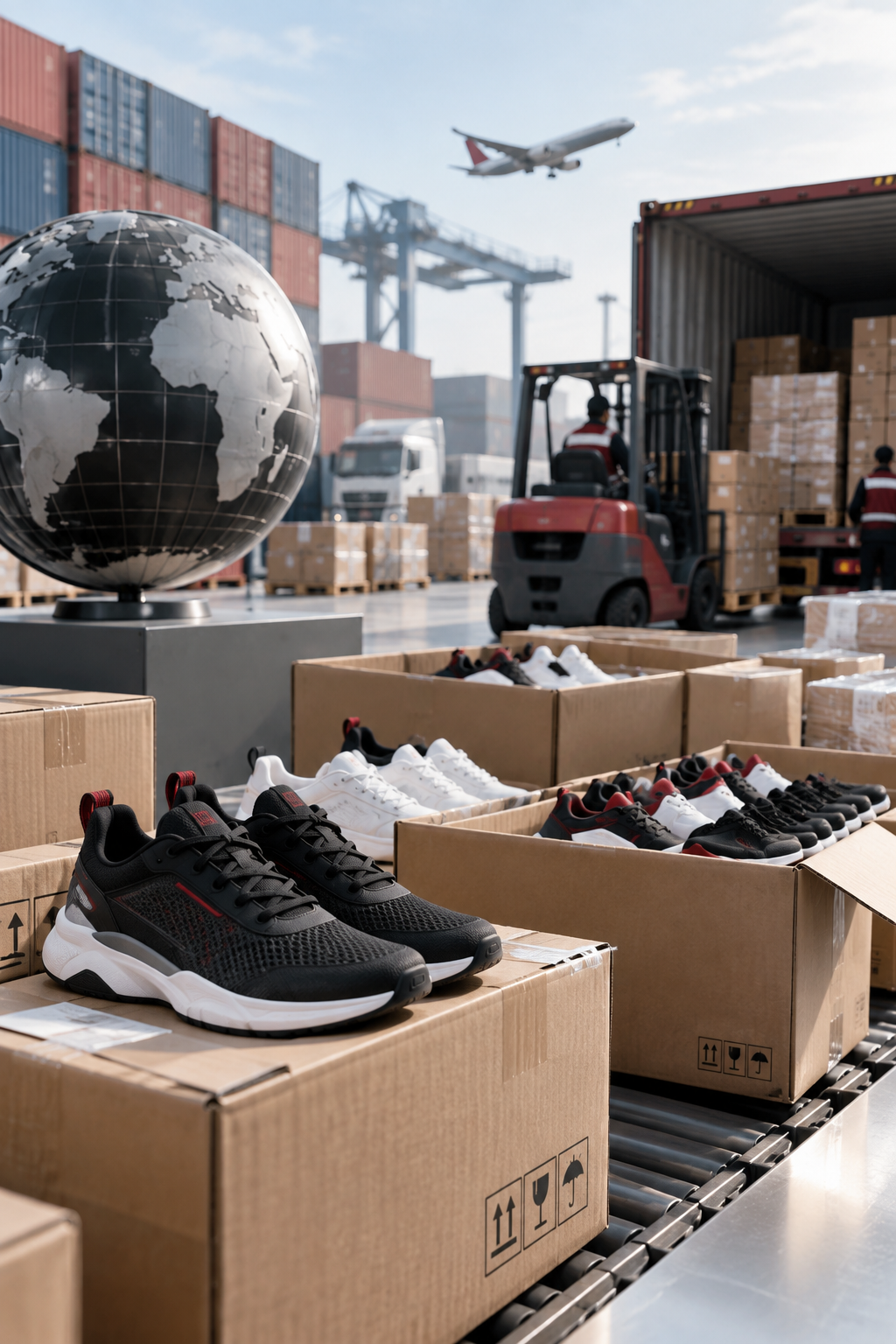
Once a bulk order has passed final inspection, packaging and shipping determine whether it arrives in sellable condition and clears customs without delay. Agreeing these details early, ideally at the sample stage, avoids last-minute changes that can push back a delivery window.
Packaging usually has three layers: the individual shoe box, the inner pack and the export carton. Buyers should confirm box artwork, tissue or stuffing paper, barcode and size labels, and the number of pairs per carton and per size run. Carton dimensions and gross weight also feed directly into freight cost, so a size-assorted packing plan should be agreed before production ends.
For shipping, the main decisions are the trade term, such as FOB, CIF or DDP, the port of loading and the transport mode. Full container loads are generally the most economical for larger volumes, while smaller programs may ship as part of a consolidated load or by air for urgent seasonal launches. Accurate commercial invoices, packing lists and, where required, certificates of origin help ensure smooth customs clearance at the destination.
Buyers with specific retailer or country requirements, such as labeling rules or restricted-substance documentation, should share these at the start of the project. The Polaris team coordinates packing and export documentation with each order so that overseas partners have a clear picture of shipment timing and contents.